Kalmar – from the workshop floor to a global innovation hub
It started with a fork on a tractor at a sawmill in the Småland village of Lidhult more than 75 years ago. Today, over 200 people from around the world work on developing the next generation of heavy forklifts and logistics solutions at Kalmar Innovation Center in Ljungby. Yet despite cutting-edge technology, automation and electrification, everything still begins with the same Småland spirit as before: finding a smarter way to get the job done.
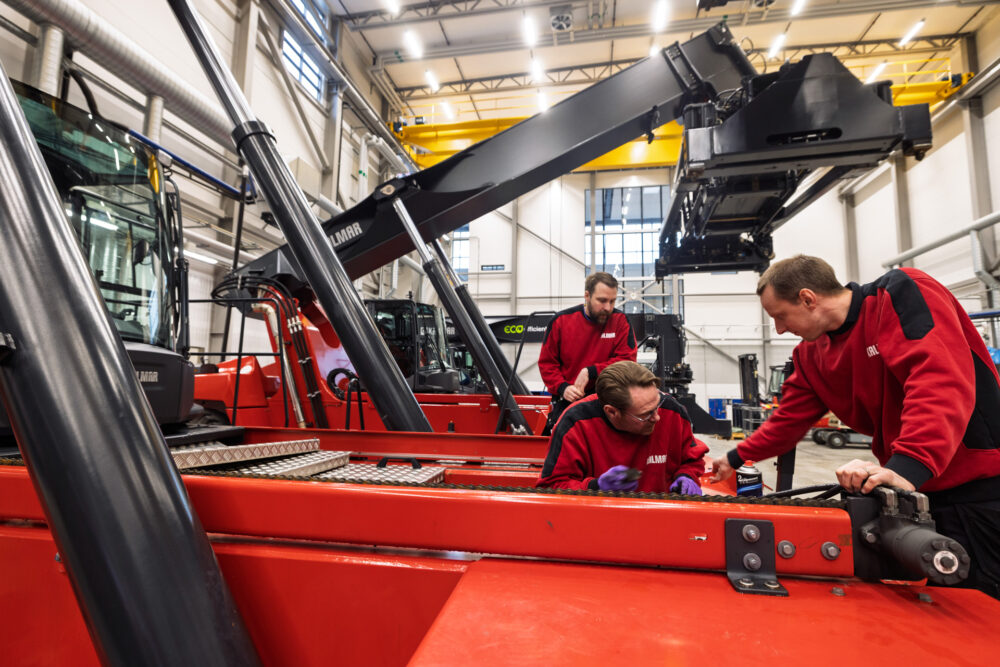
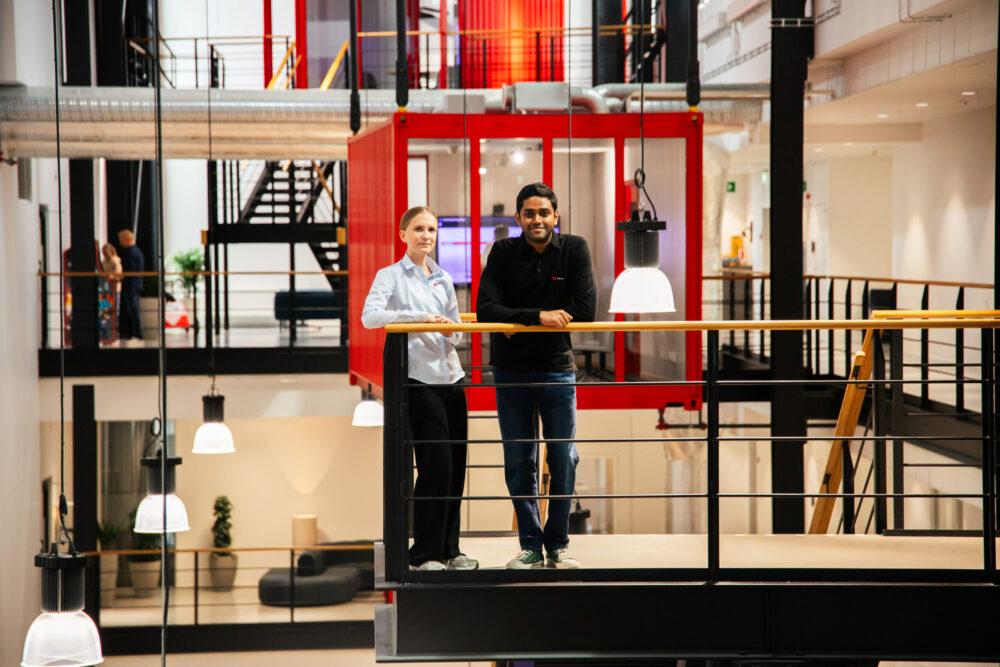
Along the E4 motorway in Ljungby stands Kalmar Innovation Center – a multi-million investment where around 210 people from more than 20 nationalities develop next-generation logistics solutions. Engineers, software developers, designers and prototype builders work under one roof to drive progress in electrification, automation, autonomous machines and digital systems.
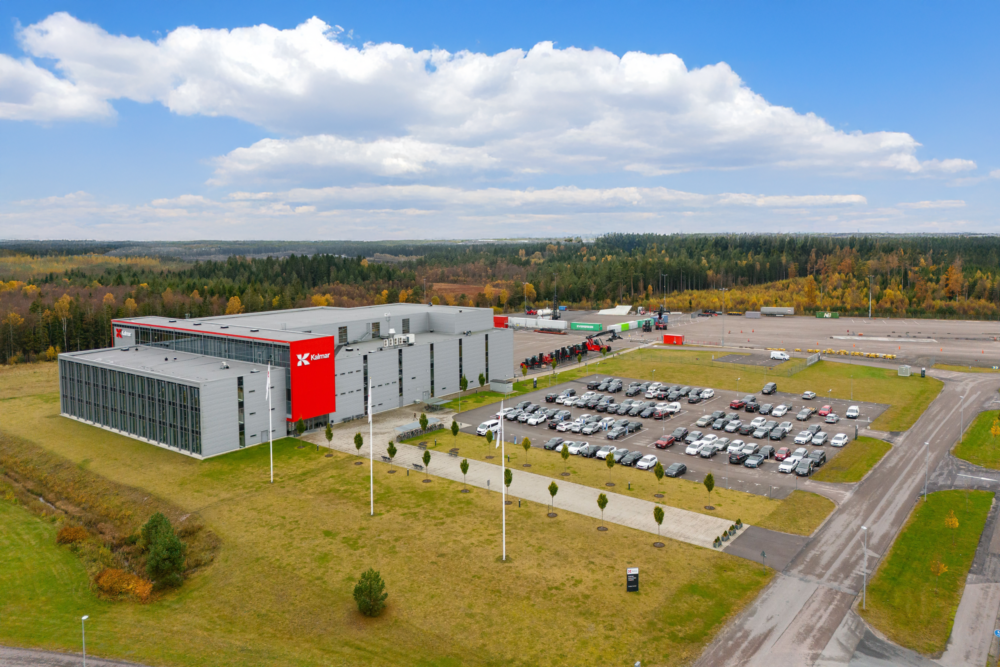
Kalmar works across the entire value chain to reduce its climate impact – from electrified machines to fossil-free materials and green steel. The goal is a more sustainable logistics industry where heavy material handling can be carried out with lower emissions and greater efficiency.
Kalmar is today a global company with roots in Finland, the United States and the Netherlands, and an important part of the company’s identity is rooted in Småland. Because even though Kalmar’s forklifts are used in ports across the world, part of the story doesn’t begin there – it begins at a sawmill in the forest.
It all started with timber at a sawmill
In 1949, the first forklift was built at a sawmill in Lidhult, outside Ljungby, by newly hired Erik Rydberg together with a group of curious enthusiasts. The solution was as simple as it was ingenious: they mounted a fork on a tractor to lift timber. When the new forklift was ready to be tested, a hole had to be cut in the roof to get it out – cheered on by the sawmill’s manager, John Karlsson. It was an innovation that would change material handling across the world.
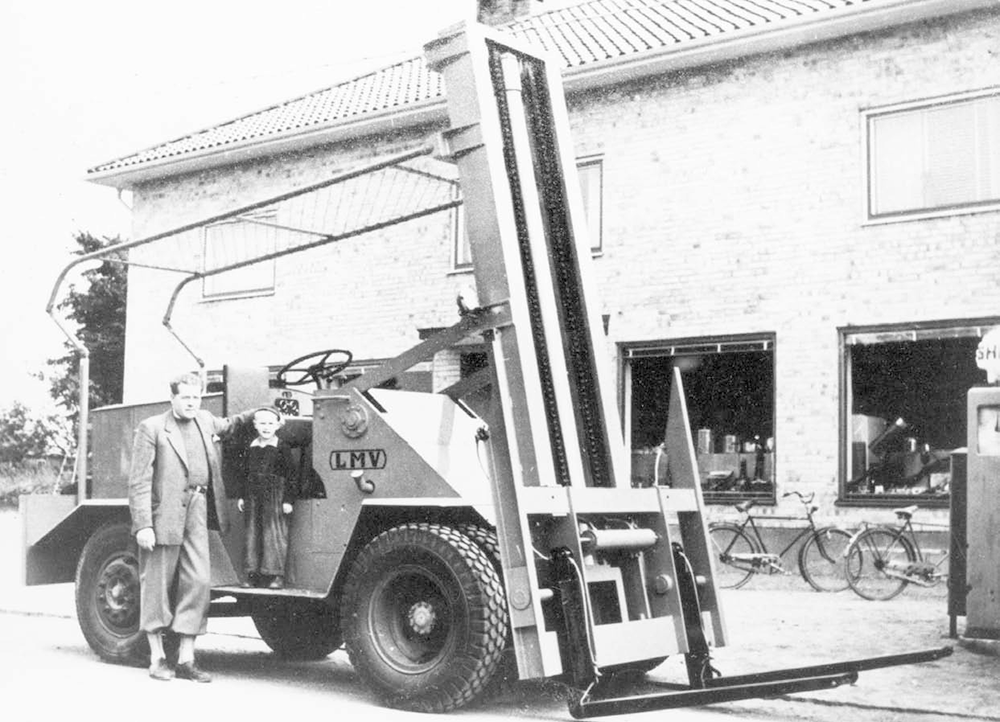
From Lidhult, forklifts grew into machines that made their way into the world’s ports, industries and logistics centres. When container traffic exploded in the second half of the 20th century, Kalmar supplied the world with forklifts capable of rapidly moving containers between ships, trucks and railways.
World records from the forest
During the 1980s and 90s, Kalmar repeatedly set new industry standards, and in Lidhult the world’s largest forklifts were built. In 1991, the company set a world record with a forklift capable of lifting 90 tonnes. And in 2014, they broke the record again – this time with a lift of over 100 tonnes.
It is humbling to consider how much of global logistics has actually been shaped in the forests of Småland. Forklifts from Lidhult and Ljungby have been used in major tunnelling projects, by the US Army, for handling giant components for wind farms, and in ports and industries in every corner of the world.
And just like so many other Småland industrial success stories, that achievement was built not only by machines – but by the people of Småland.
The engineers are the heart of it all
In Småland, engineering expertise has long been a natural resource – understanding real-world problems and finding smarter solutions. The same ingenuity that once put a fork on a tractor now drives the development of electric and autonomous machines.
Despite being a global company, something very local remains. Kalmar Innovation Center is open to school classes, associations and curious visitors. There is a pride in showcasing the inventiveness and innovative power that continually reinvents itself here – in the heart of Småland.
With electrification, digitalisation and sustainable materials at the forefront, Kalmar demonstrates how Småland engineering continues to contribute to the transformation of a global industry – just as it did 75 years ago, and into the future.